Mold Inspection & Testing for Your Home
Request an estimate from a local provider
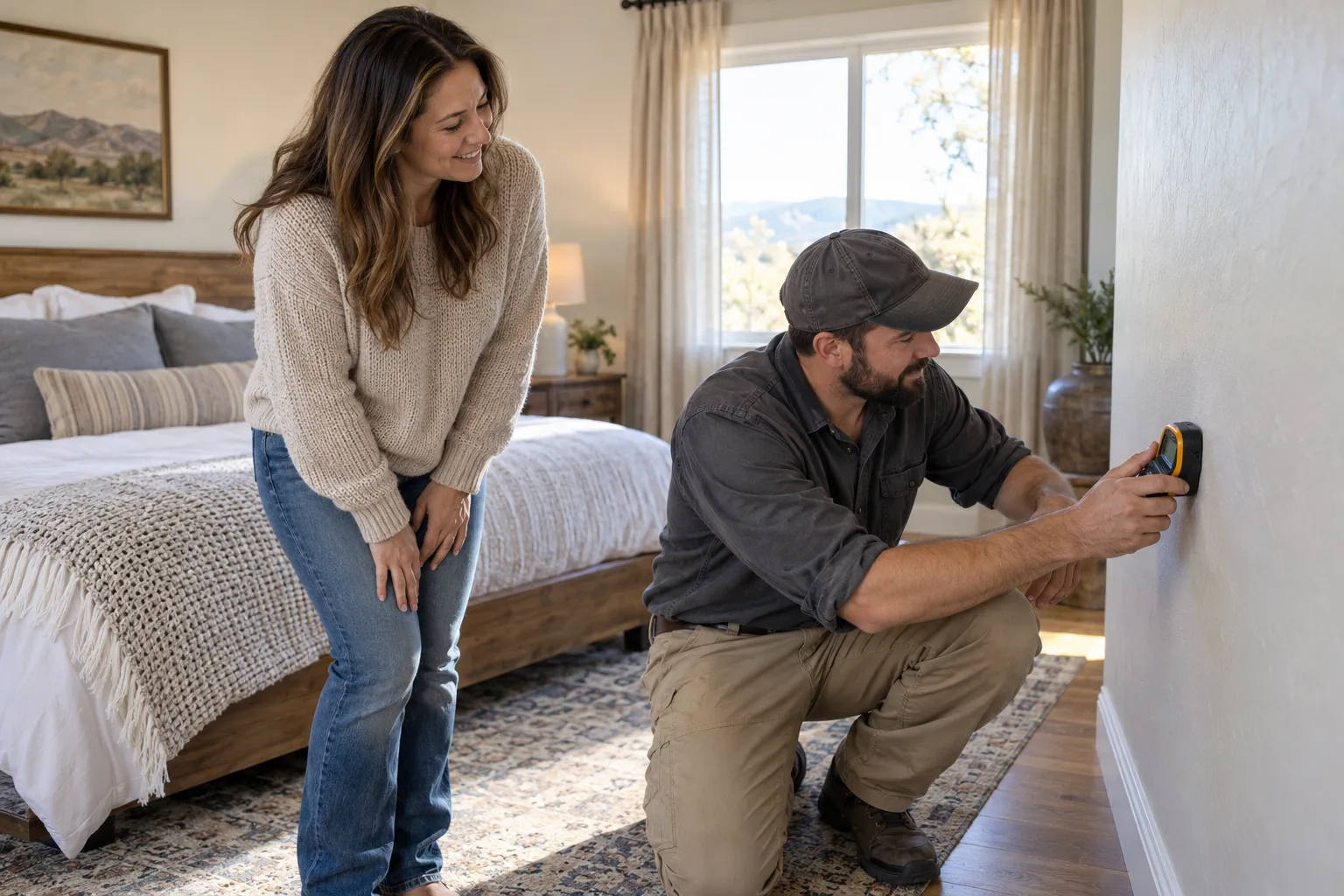
Mold rarely shows up all at once. It starts as a faint smell, a small stain, or paint that bubbles near a window. A mold inspection is the careful look that turns those hints into plain answers. A local provider checks the home, reads moisture levels, and may collect samples for a lab.
Hopedmarine Mold Help is a referral service. It connects homeowners in American Canyon and the American Canyon area with independent providers who handle residential inspections and testing. Hopedmarine Mold Help does not do the work itself. If this is your first time dealing with mold, you are in good company. This page explains each step in simple words so the first move feels calm and clear.
Think You Have Mold? Start With a Look
Mold gives small hints before it causes big trouble. Think of a slow drip under a sink. One drop means nothing. A few months of drops means a stained cabinet and a soft floor.
If you searched for mold inspection near me, this page is a good place to begin. Hopedmarine Mold Help connects you with independent providers in the American Canyon area. The provider does the inspecting. Hopedmarine Mold Help helps you find one.
Signs to act on first
Start with the signs that suggest moisture is still active:
- A musty smell that comes back after you clean
- Water stains that grow or darken on a ceiling or wall
- Paint that peels or drywall that bubbles
- Damp carpet, a soft floor, or warped baseboards
- A stuffy nose or itchy eyes indoors that ease when you leave (this is not medical advice)
After a leak, flood, or roof problem
Recent water raises the urgency. Mold can begin on wet materials within a couple of days. Dry the area as much as you safely can, then ask a provider to look. Many providers can respond quickly. Request a callback to check provider availability.
When an Inspection Makes Sense
An inspection is like a checkup. You do not wait for a broken bone to see a doctor about a sore ankle. These situations are good reasons to book one:
- You can smell mold but cannot see it
- You are buying or selling a home
- You had water damage and want to confirm the home is dry
- Someone in the house has symptoms that seem tied to one room
- Mold was cleaned before and you suspect it is back
Older bungalows and many tract homes built from the 1950s to the 1980s have aging pipes and roof flashing. Stucco homes on slabs can hold moisture near the base of a wall. Small leaks in these spots stay hidden for a long time.
What Happens During the Visit
A few questions first
The provider asks about past leaks, repairs, and smells. Your answers point them to the right rooms.
The walk-through
Next comes a careful look at ceilings, walls, window frames, closets, the attic, and under sinks. Think of it as a detective checking the usual hiding spots.
Moisture readings
A moisture meter works like a thermometer for dampness. It tells the provider whether a wall is wet, even when the paint looks fine. Some providers also use a thermal camera to spot cool, damp patches.
Types of Mold Testing
Testing is a tool, not a requirement. Your provider will suggest what fits your home.
Air samples
An air sample captures what floats in a room, like scooping a cup of water from a pond. The lab counts and names the spores. Providers often take an outdoor sample too, for comparison.
Surface and bulk samples
A tape lift or swab checks a visible spot. A small piece of material can be sent in as well. These samples show what kind of growth you have.
When testing may not be needed
If mold is plainly visible, a provider may skip sampling and focus on finding the moisture source. Ask why they suggest each test. Many homeowners search for certified mold testing. It is fair to ask what training and credentials a provider holds, and whether your state requires any.
Understanding Your Results
A lab report can look like a page of strange names. Reading it is like comparing your yard to the street. What matters is whether indoor levels and types differ from the outside.
Outdoor air changes with the seasons. Dry spells, winter rain, and wildfire smoke can all shift what a sample shows. A good provider explains this in plain words and tells you what the numbers mean for your home.
Inspection and Remediation: Separate or Together?
Some providers do both jobs. Others only inspect. Think of a home appraiser and a home seller. A separate opinion can feel more neutral, while one provider for both can feel simpler.
Neither is wrong. Ask each provider how they handle it, and get any plan in writing. Cleanup is a different step with its own page and its own estimate.
How to Prepare for Your Inspection
- Write down where you smelled or saw signs, and when
- Note past leaks, repairs, and any insurance claims
- Clear access to closets, the attic hatch, and under-sink cabinets
- Keep windows closed for a few hours before air sampling, if asked
- Do not scrub or paint over suspect spots first
If you plan to file a claim, remember that some policies may cover sudden damage. Check your policy. Providers can often help document damage for a claim.
Questions to Ask the Provider
- What will the visit include, and what costs extra?
- How many samples do you suggest, and why?
- Which lab will analyze them?
- Will I get a written report in plain language?
- Do you also do cleanup, and how do you handle that overlap?
Catch It Small
A short look today costs far less than opening walls later. When you are ready, request an estimate and a local provider will walk you through the next step.
What's Included
Visual Walk-Through
A provider checks ceilings, walls, attics, and under-sink spaces for stains, smells, and hidden damp spots.
Moisture Readings Taken
Meters and thermal tools help show where walls are wet, even when paint looks normal.
Lab Sampling When Needed
Air, surface, or material samples go to a lab to name what is growing.
Written Report
You get plain-word findings and suggested next steps so you can decide with confidence.
Typical Mold Inspection and Testing Costs
Prices vary by home size, region, and how many samples you need. These are typical U.S. ranges only. Always ask for a written quote before you agree to any work.
| Item | Typical range | Notes |
|---|---|---|
| Visual inspection | $300 – $600 | Often includes moisture readings |
| Inspection with air samples | $400 – $1,000 | Price rises with each room tested |
| Surface or tape sample | $50 – $150 | Per spot, plus lab processing |
| Lab analysis fees | $40 – $100 | Per sample, billed by the lab |
| Thermal camera scan | $200 – $500 | Helps find hidden damp areas |
| Follow-up clearance test | $250 – $700 | Used after cleanup is finished |
How It Works
Request an estimate
Tell us about the smell, stain, or leak and where it showed up.
Get matched
A local provider in the network reaches out to talk through your situation.
Inspection and testing
The provider looks, takes readings, and collects samples if they are needed.
Review the written findings
You get a plain report and can decide on next steps at your pace.
Why Call Hopedmarine Mold Help
Plain Answers
Providers in our network explain findings in simple words, so you know what the report means for your home.
Local Providers
Independent providers know how area homes and weather affect moisture.
Clear Start
Request an estimate and compare options before you commit.
No Pressure
Asking for an estimate carries no obligation to hire anyone.
Other Services
Need mold inspection & testing services in American Canyon?
Seeing a stain, smelling something musty, or just unsure? Send a request and a local provider in our network will follow up with next steps.
No obligationMold Inspection & Testing Services FAQ
How do I know if I need a mold inspection?
Look for a musty smell that returns, spreading stains, bubbling paint, or damp floors. A past leak or flood is also a good reason. If you are unsure, a short visual inspection can confirm whether moisture or mold is present.
Is mold testing always necessary?
No. When growth is easy to see, a provider may skip sampling and focus on the moisture source. Testing helps most when you smell mold but cannot find it.
How long does a mold inspection take?
Most visits take a few hours, depending on home size and how many samples are collected. Lab results usually take a few days. Ask the provider for their expected timeline, since it varies by lab and season.
Reach a local provider
Seeing a stain, smelling something musty, or just unsure? Send a request and a local provider in our network will follow up with next steps.
No obligation